Wei Collection, Upper Volume
Radical: Bamboo (zhú)
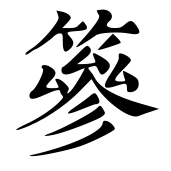
San
Kangxi strokes: 17
Page 896, Entry 11
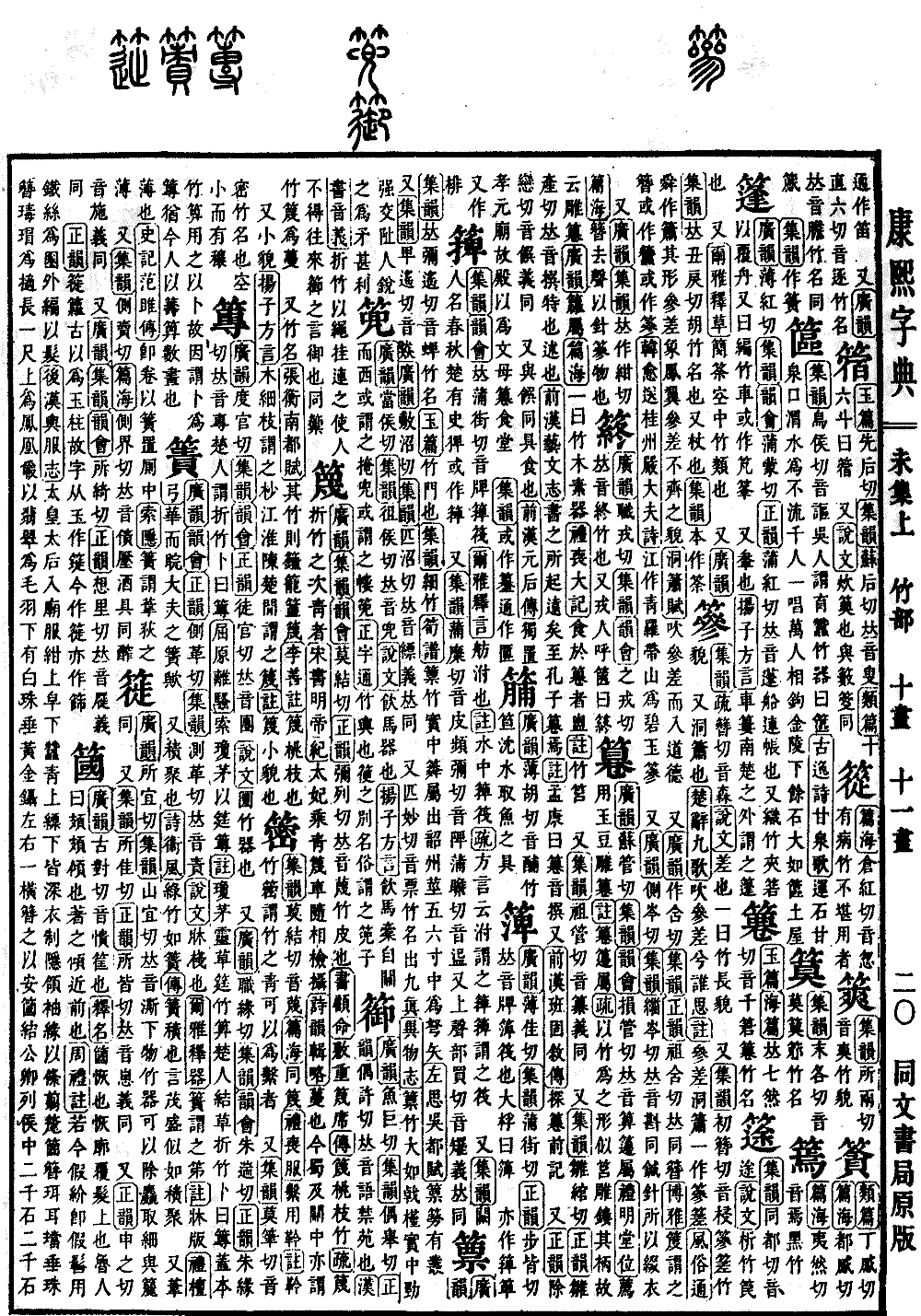
According to the Sound Rhymes (Jiyun), pronounced sen. According to the Explaining Graphs and Analyzing Characters (Shuowen), it means uneven. One source says it describes the appearance of long bamboo. Also, according to the Sound Rhymes (Jiyun), pronounced qin. It describes the appearance of bamboo. It also refers to a vertical bamboo flute (dongxiao). In the Elegies of Chu (Chucheng): "Playing the vertical bamboo flute, for whom do I long?" Commentary: The vertical bamboo flute is a wind instrument. Also written as san. According to the Comprehensive Customs (Fengsutong): Emperor Shun created the flute, its shape is uneven, resembling the uneven appearance of a phoenix wing. In the Rhapsody on the Vertical Bamboo Flute (Dongxiao Fu): "Playing the flute to enter into the way of virtue." Also, according to the Broad Rhymes (Guangyun), pronounced zan. According to the Sound Rhymes (Jiyun) and Orthography Rhymes (Zhengyun), pronounced zan. Same as hairpin. According to the Erudite Refinements (Boya), it is called a hairpin. Sometimes written in a variant form or a variant form. In the poem by Han Yu, Seeing Off Governor Yan of Guizhou: "The river acts as a green silk belt, the mountains are like jade hairpins." Also, according to the Broad Rhymes (Guangyun), pronounced zhen. According to the Sound Rhymes (Jiyun), pronounced zhen. Same as needle, used for sewing clothes. Also, according to the Broad Rhymes (Guangyun) and Sound Rhymes (Jiyun), pronounced zan. According to the Collection of Graphs (Pianhai), it is a variant of hairpin in the falling tone, used for piercing things with a needle.