Mao Collection, Upper Volume
Radical: Heart (xīn)
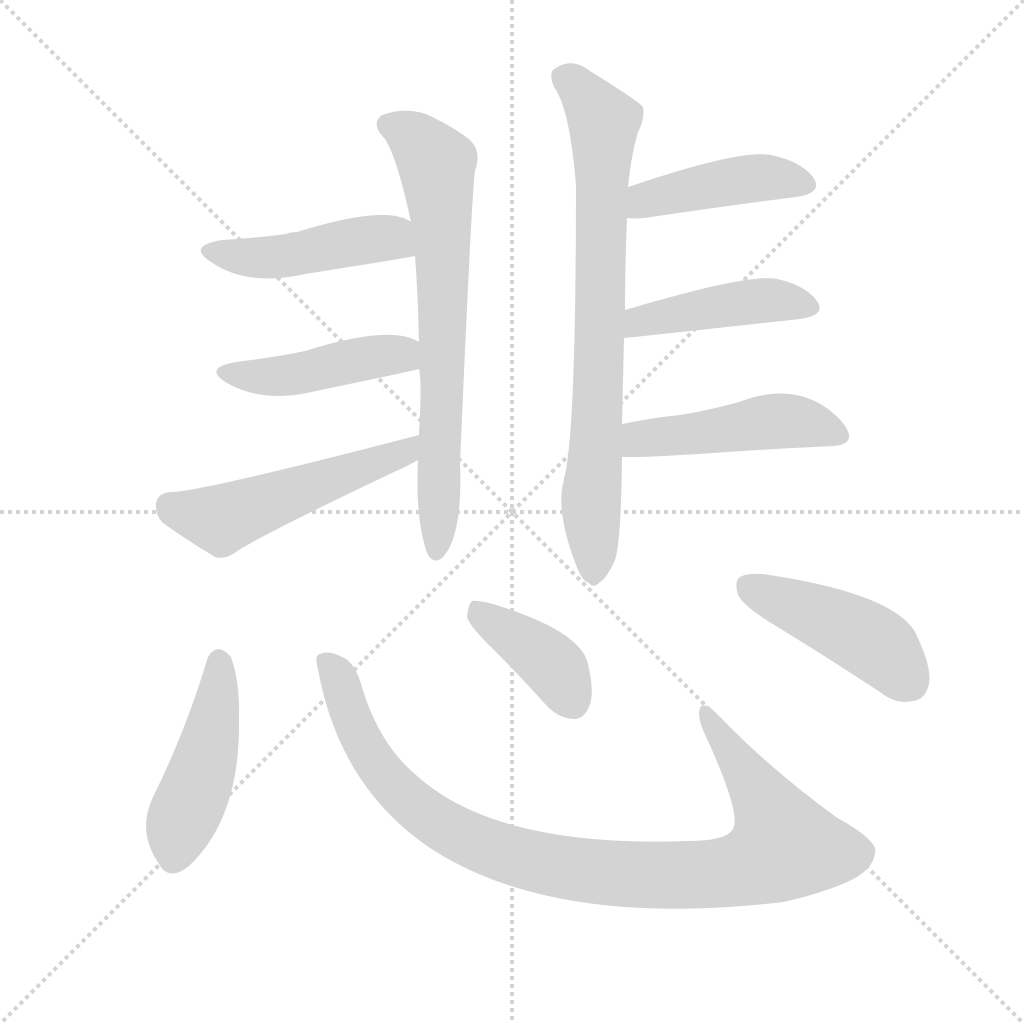
悲
Kangxi strokes: 12
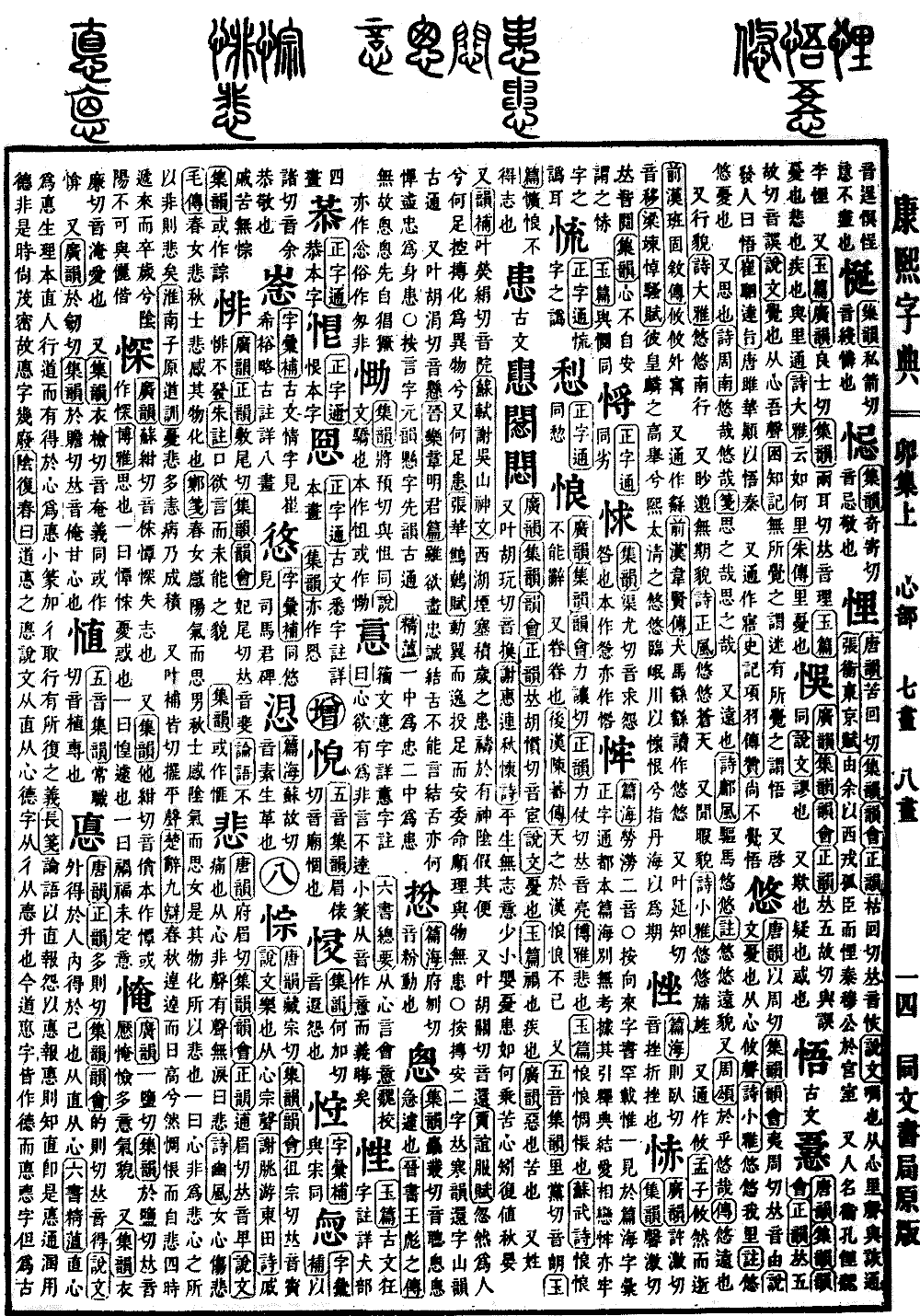
Page 388, Entry 37
Pronounced bei
According to the Explaining Graphs and Analyzing Characters (Shuowen Jiezi), it means pain. Composed of the heart radical and the phonetic component fei. Sorrow without tears is called bei.
In the Book of Odes (Shijing), Binfeng section, it is written: The woman’s heart is wounded with sorrow.
The Mao Commentary states: The woman in spring is sorrowful, and the man in autumn is sorrowful. This is because they are moved by the transformation of objects.
Zheng Jian adds: The woman in spring is moved by the yang energy and thinks of men, while the man in autumn is moved by the yin energy and thinks of women. This is why they are moved by the transformation of objects, which is the source of their sorrow.
Another interpretation suggests that when the heart perceives something as wrong, it is sorrow. When the heart feels that something is not right, sorrow arises.
In the Huainanzi, Original Way Training (Yuandao Xun), it says: If worry, sorrow, and anger are excessive, illnesses will accumulate.
Also pronounced bei (level tone) as an alternative reading.
In the Songs of Chu (Chuci), Nine Arguments (Jiubian): The spring and autumn days grow long, I am melancholic and sorrowful by myself. The four seasons pass in succession and the year ends, the yin and yang cannot always walk together.