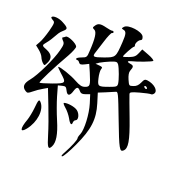
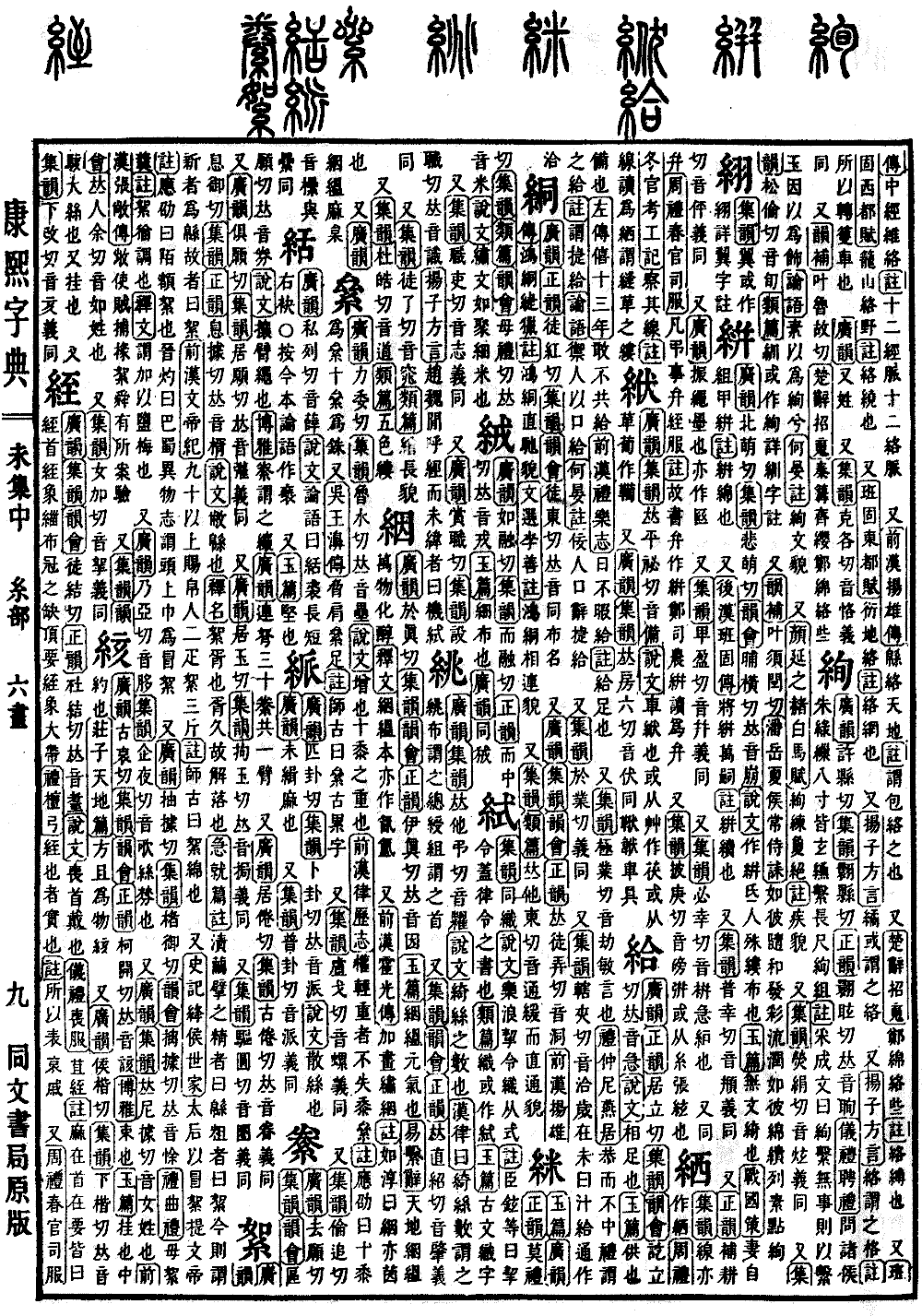
Wei Collection, Middle Volume
Radical: Silk (mì)
Kangxi Strokes: 12
Page 923, Entry 03
Broad Rimes (Guangyun), Rimes Collected (Jiyun), and Collection of Rimes (Yunhui) define it as pronounced beng.
According to the Explaining Graphs and Analyzing Characters (Shuowen), it is written as beng, representing the distinct woven cloth of the Di people.
The Jade Chapters (Yupian) defines it as patternless silk fabric.
In Strategies of the Warring States (Zhanguoce), it is written: The wife herself wove armor and beng. The commentary states: Beng means cotton fabric.
In the Biography of Ban Gu from the History of the Later Han (Houhan shu), it is written: To continue the ten thousand descendants. The commentary states: Beng means to continue.
According to Rimes Collected (Jiyun), it is also pronounced peng. The meaning is the same.
According to Correct Rimes (Zhengyun), it is also pronounced beng. The meaning is the same.
According to Broad Rimes (Guangyun), it refers to stretching a marking line. It is also written as a variant form.
According to Rimes Collected (Jiyun), it is also pronounced bing. The meaning is the same.
According to Rimes Collected (Jiyun), it is also pronounced bing. It refers to a tight rope.
It is also identical to the character bian. In the Rites of Zhou (Zhouli), Spring Offices, Ministry of Ceremonial Dress: For all condolence matters, wear the bian-style hemp mourning garment. The commentary states: In the old texts, bian was written as beng. Zheng Sinong reads beng as bian.
According to Rimes Collected (Jiyun), it is also pronounced pang. Sometimes written with the silk radical, it means to stretch a string.