Xu Collection, Lower Volume
Radical: Food (shí)
Kangxi strokes: 14
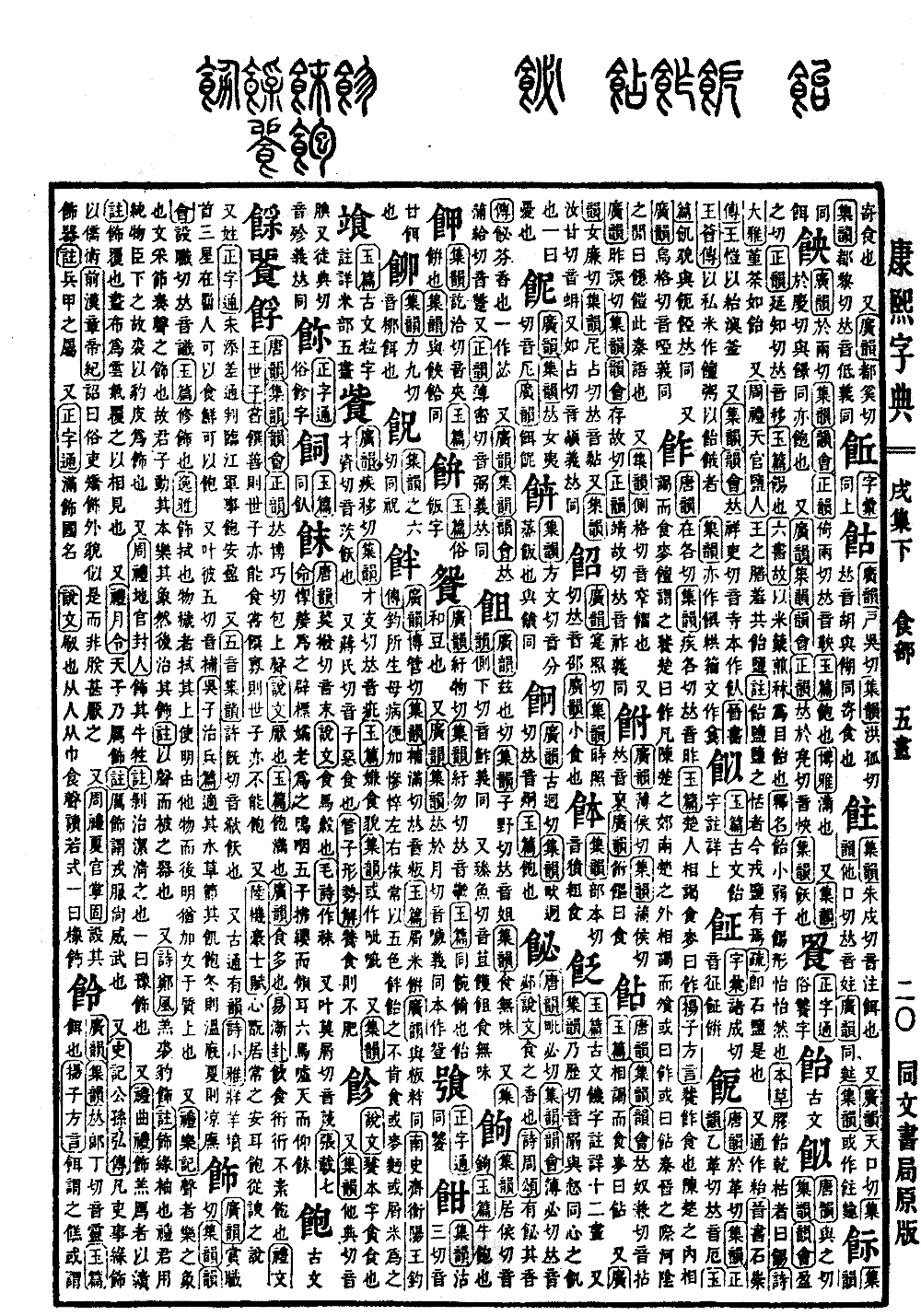
Page 1418, Entry 38
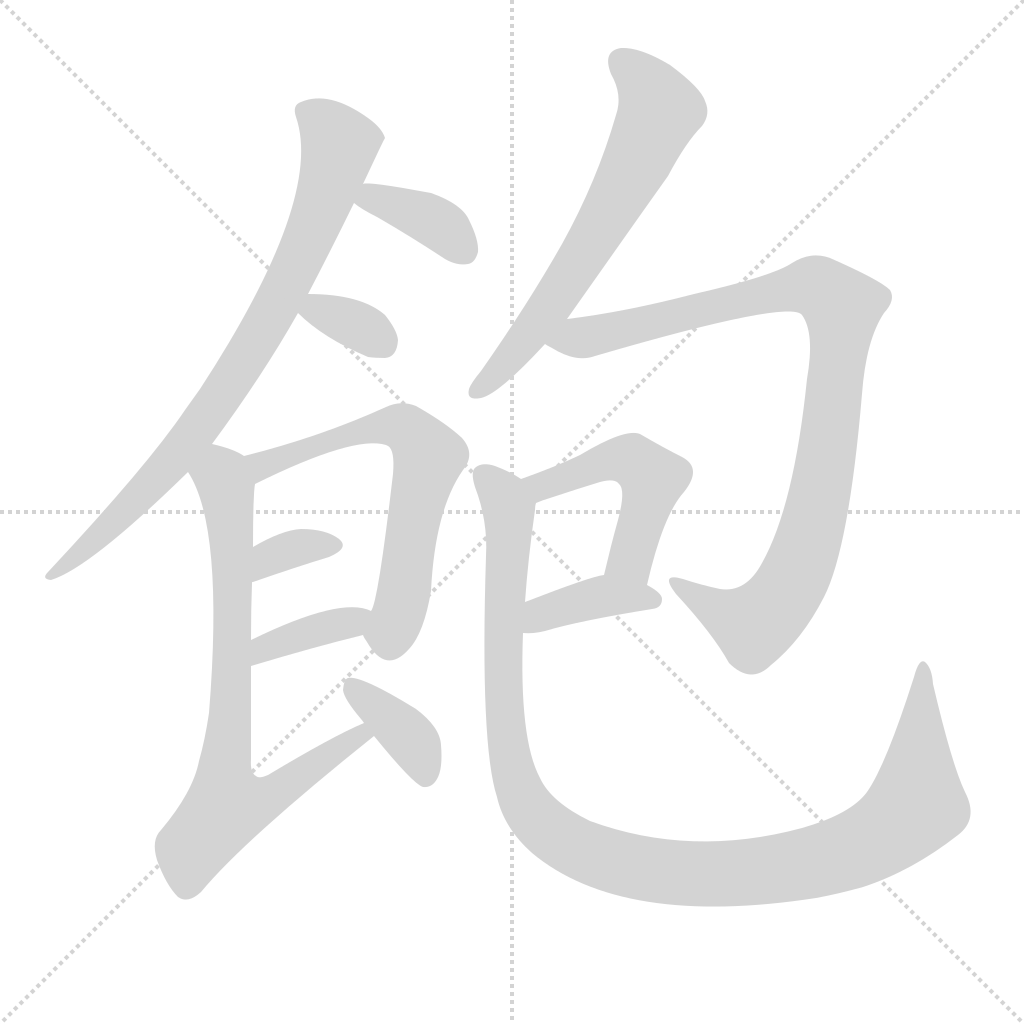
According to the Tang Rhyme (Tangyun), Collection Rhyme (Jiyun), Rhyme Compilation (Yunhui), and Orthodox Rhymes (Zhengyun), it is pronounced bao (rising tone). The Analytical Dictionary of Characters (Shuowen Jiezi) defines it as satisfied. The Jade Chapters (Yupian) defines it as full. The Broad Rhyme (Guangyun) defines it as eating a large amount. The Book of Changes (Yijing), Hexagram Jian, states: When food and drink are plentiful, it does not mean eating without contributing. The Book of Rites (Liji), Section on the Crown Prince of King Wen, records: If the tasted dishes are abundant, the crown prince may eat more; if the tasted dishes are few, the crown prince will not be satisfied.
It also appears in the Rhapsody on the Gallant (Haoshi Fu) by Lu Ji: The heart is accustomed to ordinary ease, and the ears are accustomed to hearing flattery.
It also functions as a surname. The Zhengzitong records: During the Song dynasty, there was an official serving as the assistant magistrate of Linjiang Military Prefecture named Bao Anying.
According to the Five Sounds Collection of Rhymes (Wuyin Jiyun), it is pronounced xi. It means to be fully satisfied.
In ancient times, it shared a rhyme with you. The Book of Odes (Shijing), Lesser Odes of the Kingdom, states: The ewe has a large head and a thin body, and the three stars shine on the fish creel. Although people have food, they are rarely able to be full.
It also follows the rhyme scheme of bu (rising tone). The Wuzi, Section on Governing the Army, states: Adapt to the environment of water and grass, and regulate hunger and satiety. Keep the stables warm in winter and cool in summer.
Verification: In the citation from the Book of Rites (Liji), Section on the Crown Prince of King Wen, the original text reads if the tasted dishes are few, the crown prince will also not be satisfied, which omits the word then after the phrase tasted dishes are few.