Shen Collection, Upper Volume
Radical: Grass (cǎo)
Ba
Kangxi Stroke Count: 11
Page 1026, Entry 07
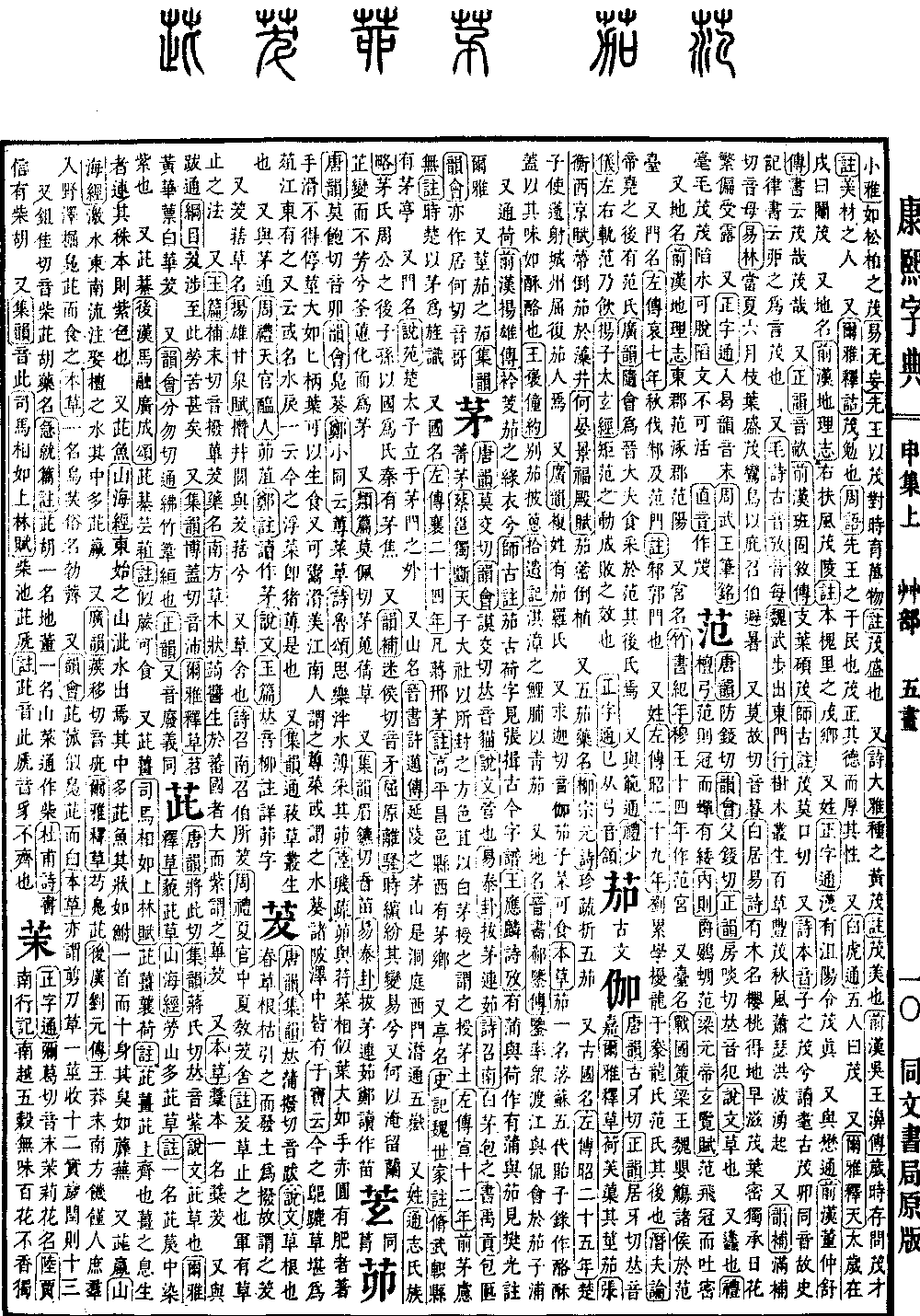
Pronounced ba. According to the Tang Rhyme (Tangyun) and Collected Rhymes (Jiyun), it is pronounced ba. According to the Explaining Graphs and Analyzing Characters (Shuowen), it refers to the root of a plant. When spring grass roots wither, pulling them up turns over the soil, which is called bo; thus, it is named ba. Also, ba-ku is the name of a plant. In the Rhapsody on Sweet Springs (Ganquan Fu) by Yang Xiong, it is written: Gathered are the fan palm and the ba-ku plant.
Also refers to a thatched hut. In the Book of Odes (Shijing), it refers to the thatched hut where the Duke of Shao resided. In the Rites of Zhou (Zhouli), Summer Offices section, it states that in mid-summer, one should instruct on the methods of lodging in thatched huts. The commentary notes that ba refers to lodging using grass, and that armies have regulations for lodging in grass.
Also, according to the Jade Compendium (Yupian), it is pronounced bi. Bi-ba is the name of a medicinal herb. The Treatise on the Plants and Trees of the Southern Regions (Nanfang Caomu Zhuang) states that ginger paste produced in foreign lands, large and purple, is called bi-ba. Also, according to the Compendium of Materia Medica (Bencao), one name for ligusticum is gao-ba.
Also serves as a variant of the character meaning to travel. According to the Compendium (Gangmu), traveling here has been extremely arduous.
Also, according to the Collected Rhymes (Jiyun), it is pronounced pei. According to the Erya, a dictionary of synonyms, it states that for the plant known as tiao, the yellow flower is called biao and the white flower is called ba.
Also, according to the Dictionary of Rhymes (Yunhui), it is pronounced fu, serving as a variant of the character for a bamboo rope. According to the Correct Rhymes (Zhengyun), it also has the pronunciation fei, with the same meaning.