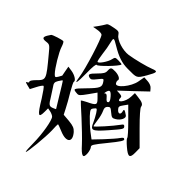
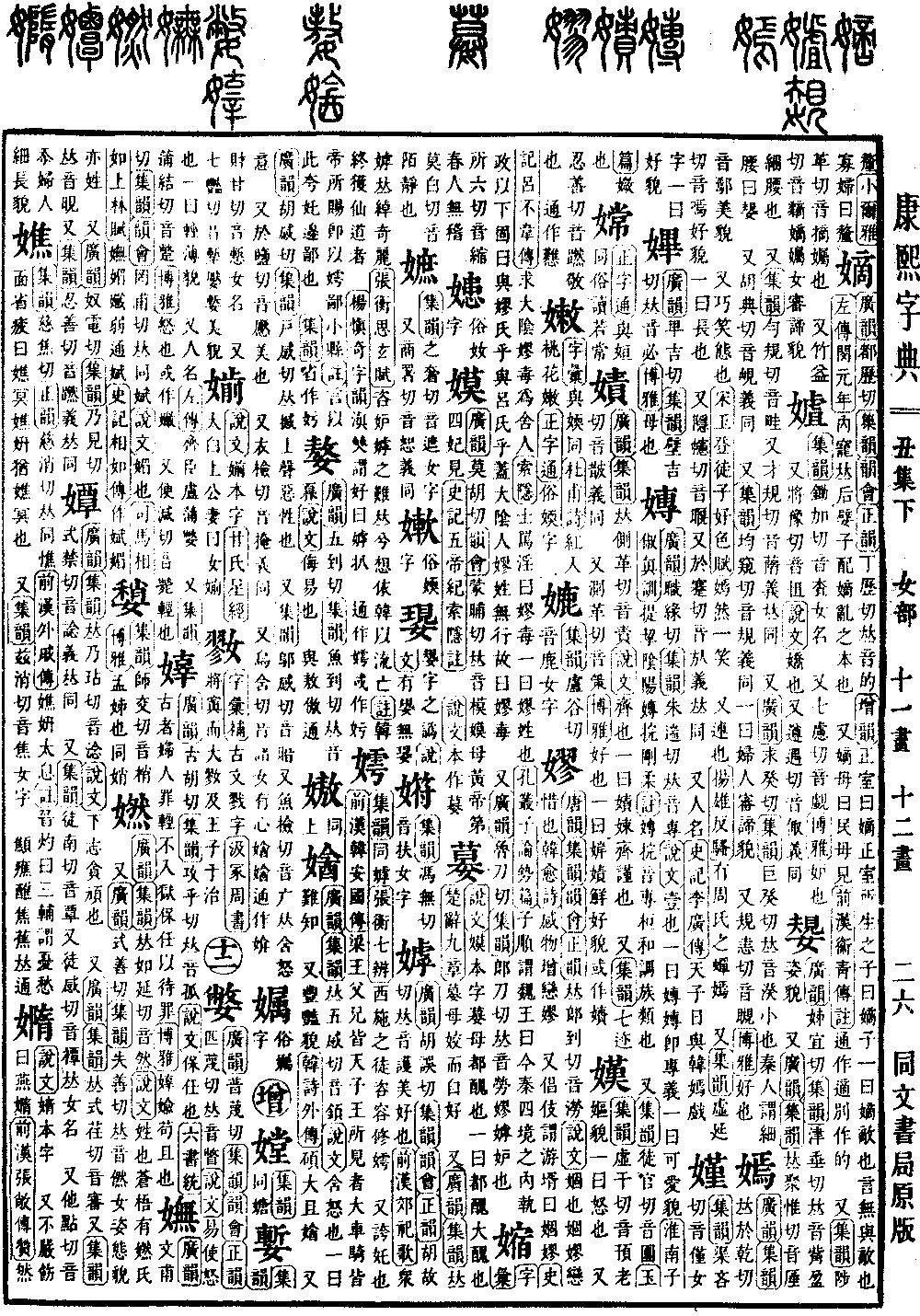
According to the Extensive Rhymes (Guangyun) and the Collected Rhymes (Jiyun), the pronunciation is gan (falling-rising tone), which sounds the same as the character pronounced qin (rising tone). The Explanation of Simple and Compound Characters (Shuowen Jiezi) interprets this as holding anger. Another interpretation is that it is difficult to know.
Furthermore, a double chin is called an. The Book of Han Poetry (Hanshi) states: Being tall and having a double chin.
Additionally, according to the Extensive Rhymes (Guangyun) the pronunciation is han (rising tone), and according to the Collected Rhymes (Jiyun) the pronunciation is han (rising tone). It means a bad temperament.
Additionally, according to the Collected Rhymes (Jiyun) the pronunciation is an (rising tone), which sounds the same as the character pronounced an (falling tone). There is also the pronunciation jian (rising tone), which sounds the same as the character pronounced guang (falling tone). Both mean holding anger.
Additionally, the pronunciation is yan (even tone), which sounds the same as the character pronounced yan (even tone). It means beautiful.
Additionally, the pronunciation is yan (rising tone), which sounds the same as the character pronounced yan (rising tone). The meaning is the same.
Additionally, the pronunciation is an (even tone), which sounds the same as the character pronounced an (even tone). It refers to a woman who is calculating. The character an is interchangeable with the character an.
Textual research: Abundant and beautiful appearance. The Hanshi Waizhuan says: Tall and having a double chin. Careful note: This passage does not exist in the Hanshi Waizhuan. Checking the Taiping Imperial Reader (Taiping Yulan), this citation of the Book of Han Poetry (Hanshi) uses the character an, and additionally cites the commentaries saying that an is a double chin. Following the commentaries of the Book of Han Poetry (Hanshi), the phrase abundant and beautiful appearance has been corrected to a double chin is called an. The two characters for external biography have been omitted.