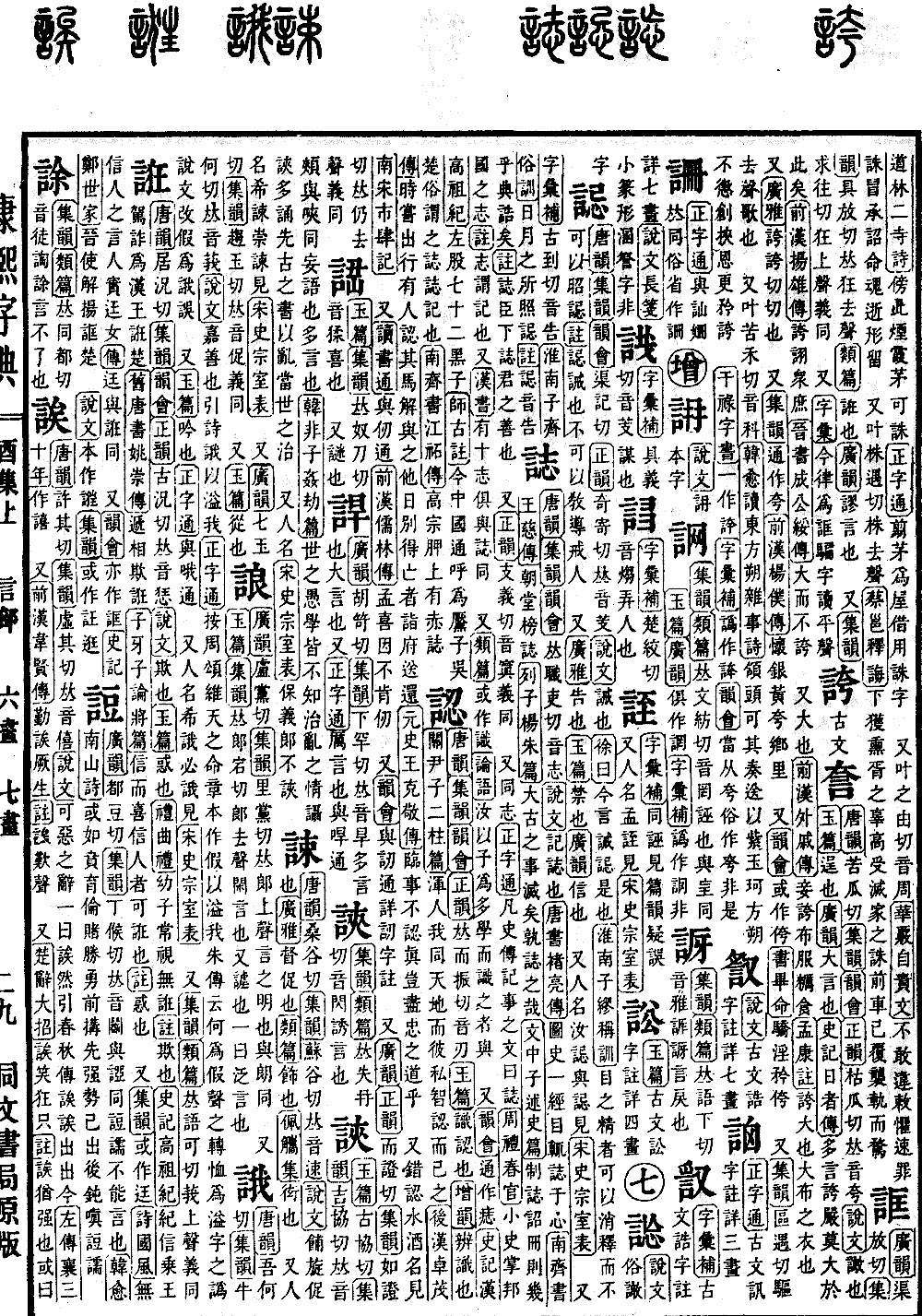
You Collection, Upper Volume
Radical: Speech (yán)
Pronounced xi
Kangxi stroke count: 14
Page 1161, Entry 02
According to Explaining Graphs and Analyzing Characters (Shuowen Jiezi), it is an expression of detestation. Another interpretation describes it as an expression of hesitation.
Cited from the Spring and Autumn Annals (Chunqiu Zhuan): E e chu chu. In the contemporary Zuo Commentary (Zuo Zhuan, 30th year of Duke Xiang), it is written as xi.
Additionally, in the History of the Former Han (Qian Hanshu, Biography of Wei Xian), it is written as: exhorting one's life. Annotation: E is the sound of a sigh.
Also, in the Songs of Chu (Chuci, Great Summoning), it is written: laughing with e. Annotation: E implies reluctance. Others say it means laughter and joy. Another version writes it as yu.
There is also the term e yi, referring to suspiciousness or doubt. For a detailed explanation, see the entry for the character yi.
According to the Jade Chapters (Yupian), it is pronounced xi.
According to the Collected Rhymes (Jiyun), it is pronounced hai. Also pronounced ai. Also pronounced ai in the departing tone. Also pronounced yi. All meanings are the same.
The Collected Rhymes (Jiyun) sometimes writes it in a variant form (ai).