You Collection, Upper Volume
Radical: Speech (yán)
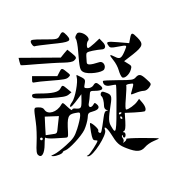
Entry: 譺
Kangxi Stroke Count: 21
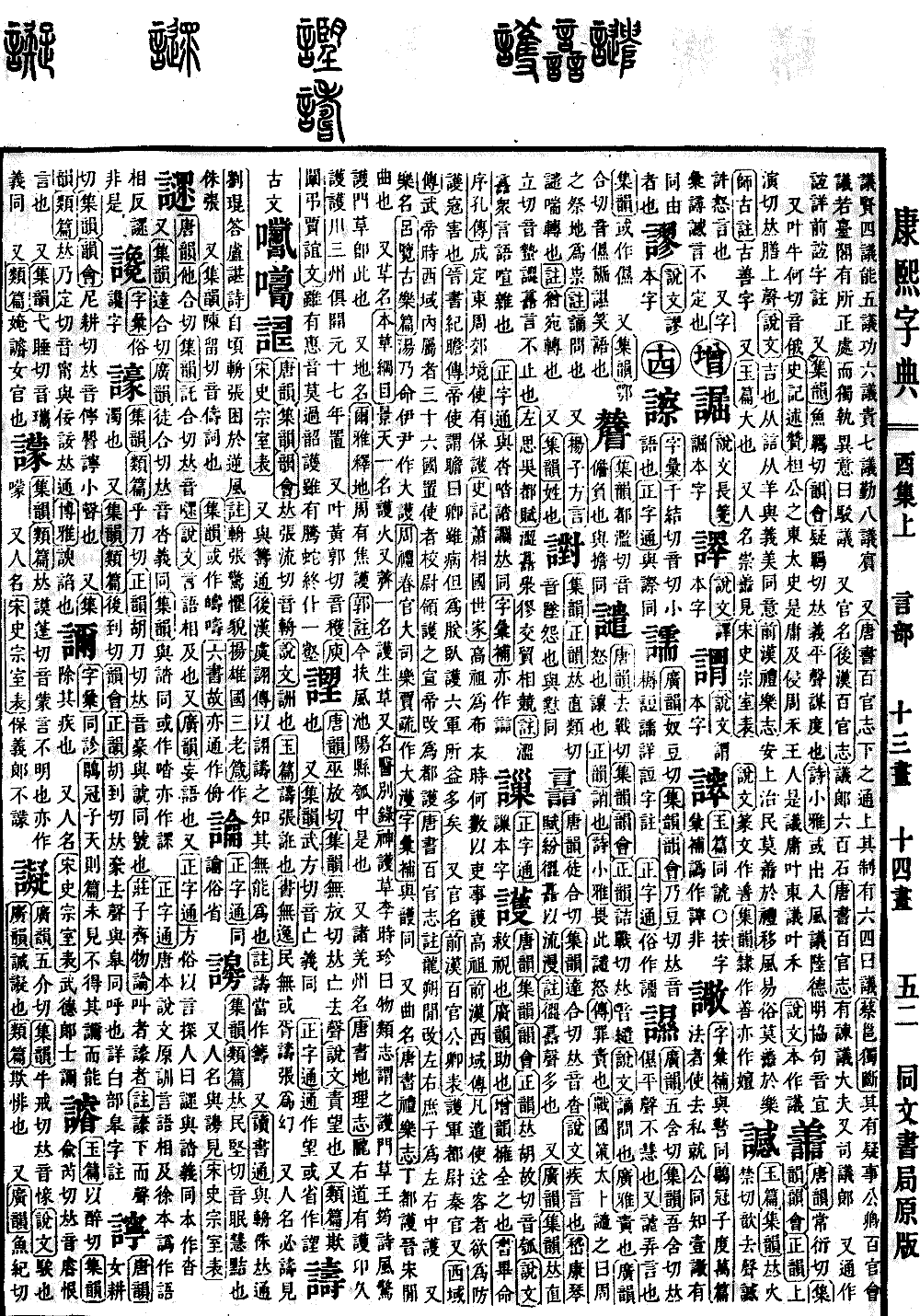
Page 1184, Entry 32
Pronounced jie.
According to the Explaining Graphs and Analyzing Characters (Shuowen Jiezi), it means foolish. According to the Expanded Dictionary of Sounds and Meanings (Guangyun), it means to warn and to be foolish. According to the Classified Chapters (Leipian), it means to deceive and to be distressed.
Also pronounced ni. It means to deliberate, to deceive, or to tease. According to the Classified Chapters (Leipian), it is the same as the character for deliberate (ni). Sometimes written in a variant form (ai). Also written in a variant form (yi). Also written in a variant form.
Also pronounced ni (falling tone). The meaning is the same.
Also pronounced yi.
According to the Supplement to the Dictionary of Characters (Zihui bu), it means the appearance of being respectful and reverent.
According to the Records of the Grand Historian (Shiji), Chu Section, Treatise on Tortoise Divination: Seeking the white snake coiled in the forest, one must fast and purify oneself in anticipation of the event. The Annotations (Suoyin) state: Pronounced yi. Those who seek the tortoise must fast and purify themselves while waiting, remaining constantly in an expectant state. According to the Collected Rhymes (Jiyun), it is the same as the character for high and steep (yi), and sometimes written in variant forms (yi) and (ai).